

Organic traffic is down 12%.
Direct traffic jumped 18%.
You didn’t launch a campaign. You didn’t go viral. Nothing about your marketing changed.
So…what happened?
Chances are, AI had something to do with it.
AI is already sending traffic to many websites, even if your analytics aren’t making that obvious. Most business owners have no idea it’s happening, let alone how to measure or optimize for it.
That’s what we’re going to fix.
This Isn’t a Future Problem. It’s Already Happening.
ChatGPT crossed 500 million weekly active users in early 2025. Perplexity is handling hundreds of millions of queries a month. Google’s AI Overviews now appear on a significant percentage of all search results, and when Google’s AI answers a question, it cites sources. Sometimes that source is you. And it’s worth noting that Bing powers portions of several AI search experiences too, which makes accurate indexing beyond Google increasingly important.
We’re watching AI referral traffic climb in client accounts across the board here in Reno. Not dramatically yet, for most local businesses, it’s still a single-digit percentage of total traffic. But the trajectory is clear, and the businesses that show up most often in AI responses are the ones who were thinking about this 12 months ago.
What “AI Channel” Actually Means
When someone uses ChatGPT, Perplexity, Claude, or Google’s Gemini to answer a question and then clicks a link to your website, that’s an AI referral visit. Depending on how the tool passes tracking data, it might show up in your analytics as:
- Referral traffic from chatgpt.com, perplexity.ai, or similar
- Direct traffic (if the AI strips referrer data)
- (not set), Unassigned, or (not provided) in your channel groupings
- Organic search if the click comes from an AI Overview inside Google’s own SERP
Here’s the uncomfortable truth: a chunk of what you’ve been calling “direct” traffic for the past two years may have actually been AI-assisted. Someone asked an AI tool about your business category, saw your name mentioned, typed your URL directly. That conversion path is invisible in traditional attribution.
One of our Reno clients recently saw visits attributed to chatgpt.com begin appearing in GA4. The volume is still relatively small, but those visitors spent more time on-site than the average organic visitor. That’s a signal we’re watching closely across every account we manage.
How AI Decides Which Businesses to Mention
This is the part most articles skip. It’s not enough to know AI is sending traffic, you need to understand why it chooses one business over another. While every AI platform works differently, they tend to favor businesses that consistently demonstrate:
Clear topical expertise. Does your content actually answer the questions people in your industry are asking? Not surface-level answers, specific, useful, experience-backed ones.
Consistent business information across the web. AI systems don’t just read your website. They compare what your website says against your Google Business Profile, review platforms, local directories, industry associations, and dozens of other sources. If your name, address, phone number, or service descriptions don’t match up, that inconsistency becomes a trust signal, the wrong kind. Consistency is becoming just as important as quality.
Strong reputation signals. Reviews, citations, and third-party mentions all function as corroboration. AI models weight information they’ve encountered in multiple places more heavily than claims that exist only on your own site.
Well-structured websites. Schema markup, clear page hierarchy, and descriptive metadata all help AI systems understand who you are, what you do, and who you serve, without having to guess.
Why This Should Change How You Think About Content
Traditional SEO optimizes for ranking signals, keywords, backlinks, technical structure. Those still matter. But AI systems don’t rely solely on traditional ranking signals the way classic search engines have. They’re looking for sources that are clear, authoritative, and specific about a given topic.
If an AI is going to mention your business when someone asks “what should I look for in a landscaping company in Northern Nevada” or “who does the best mobile dog grooming in Reno,” it needs to have encountered content that establishes you as the answer to that exact question.

That means:
FAQs that actually answer questions people ask AI. Not “What services do you offer?” but “What’s the difference between a general dentist and a cosmetic dentist?” Write the answer the AI would want to give someone.
Clear, factual business descriptions across every platform. Your Google Business Profile, your website’s About page, your service pages, AI systems pull from all of these. If your description is vague or inconsistent across sources, you’ll get skipped in favor of a competitor who made it easy.
Third-party mentions that corroborate what you say about yourself. Reviews, press mentions, local directory listings, chamber pages, these aren’t just for SEO anymore. They’re how AI learns to trust you as a legitimate answer.
Structured data on your website. Schema markup tells AI crawlers exactly what your business is, where you’re located, what you do, and who you serve. If you don’t have Local Business schema deployed on your site, that’s a gap worth fixing now.
The Hot Take Nobody Wants to Hear
Most of what gets called “content marketing” right now is still being written for Google’s crawler, not for AI systems or actual humans. Keyword-stuffed service pages, thin FAQ sections, blog posts that exist to hit a word count, AI isn’t impressed by content that exists only to rank. It’s looking for the clearest, most specific, most trustworthy answer to a question. If your content is built around gaming an algorithm, it’s not built for this.
The businesses winning in AI search are the ones who sound like genuine experts. That means publishing detailed process posts, specific case studies, actual opinions, and content that demonstrates knowledge, not content that performs knowledge.
What to Actually Do Right Now
If you want to start showing up in AI-generated answers and capturing that channel:
Audit your existing content for specificity.
Vague pages that could belong to any business in any city won’t get cited. Specific, locally-grounded, expertise-forward content will.
Get your GBP dialed in.
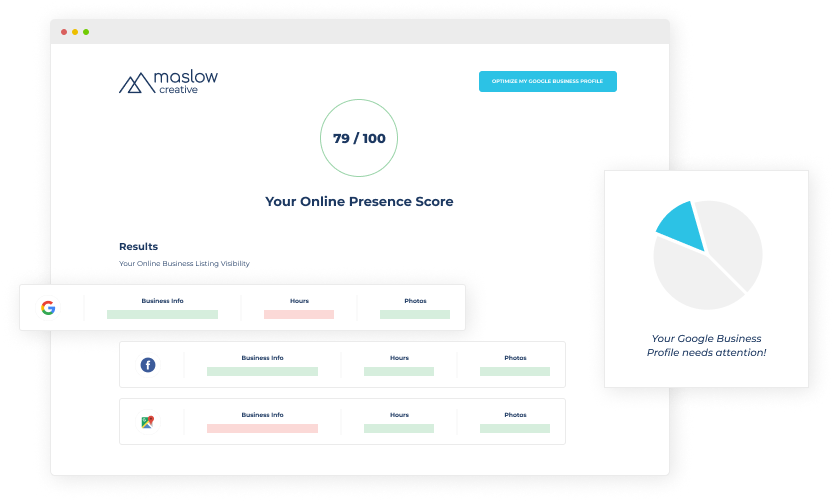
Google’s AI Overviews pull heavily from Google Business Profile data. If your categories, services, description, and photos are incomplete or outdated, you’re handing citations to competitors. Get a free GBP audit from our team, we’ll show you exactly what’s missing.

Add schema markup.
At minimum, Local Business schema on your homepage. FAQ schema on question-heavy pages. This is one of the highest-leverage technical investments for AI visibility right now.

Start tracking the channel.
Set up a custom channel grouping in GA4 for AI referral sources, chatgpt.com, perplexity.ai, claude.ai, and others. We use BrightLocal alongside GA4 to track local visibility shifts across channels. You can’t improve what you can’t measure.

Build your citation footprint.
Consistent NAP across directories, local news mentions, chamber listings, and industry associations all function as corroboration signals for AI systems.
The Bigger Picture for Reno Businesses
The acquisition funnel has a new lane. Search was already fragmenting, people using social, maps, video, voice, and AI is the next layer of that. Businesses who treat it as one more channel to understand and optimize will have a genuine edge. Businesses who ignore it will keep seeing “direct” traffic tick up in their dashboards without knowing why.
We’re already helping Reno businesses strengthen the signals AI systems rely on, from structured data and Google Business Profiles to local citations and expertise-driven content. If you want to know where you stand and which gaps are costing you the most, wonder if AI already knows enough about your business to recommend you?
Our free Google Business Profile audit identifies the biggest trust and visibility gaps that affect both traditional local search and emerging AI search. Start there.